

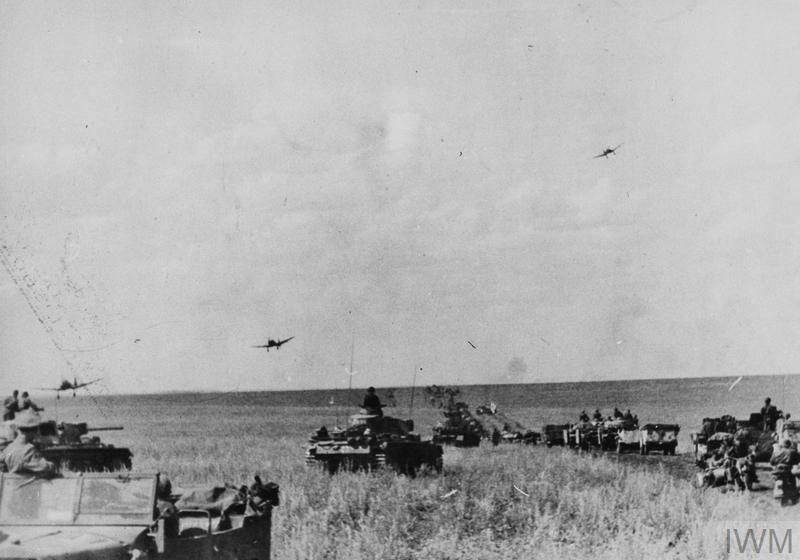
 On the morning of 5 July 1943, the Germans advanced to attack the Red Army at the Kursk salient in what would result in the largest tank battle in history.
In the north, the German pincer attacking south from Orel, made 10 miles in 5 days until halted by the Red Army. In the greater battle to the south, a 20-mile dent was made in the Soviet defences until here too the Germans ground to a halt. It was at Prokhorovka, 15 miles to the south of Kursk, that the greatest battle was fought between some 339 tanks of the II SS Panzer Corps and 672 tanks of the 5th Guards Tank Army.
Soviet propaganda at the time claimed that the Wermacht’s overall losses at Kursk included some 50,000 killed and 400 tanks destroyed, a fact still endorsed by today’s Russian historians. However, recent research (2021) has found that the Soviet armour losses were almost 14:1 and it was the overwhelming numbers that allowed the Red Army to halt the Wermacht. When the Germans continued to lose ground, Hitler called off the Kursk offensive on 15 July. Although the Germans had achieved some tactical successes it was a victory at the operational level for Stalin’s forces, despite their overall losses at a factor now believed to be in the region of 47:1.
(Above; Junkers Ju 87 Stuka dive bombers returning to their base fly low over an advancing German column of Panzer III tanks and softskin vehicles on the Orel front, July 1943.(© IWM HU 40710))